My Great Great Great Grandfather's Obituary


From The Gentleman's Magazine (1829, p. 373).

Obituary

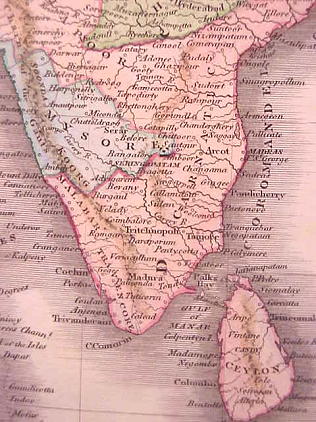
1828 - In India, aged 46, Lieut-Colonel William Dickson, commanding the 7th regiment of Bengal Cavalry at Kernaul in the Upper Provinces.

This gentleman was the eldest son of the late Thomas Dickson, esq. of Southampton and by his mother descended from Col. Gardiner, who was killed at the head of his regiment at Preston Pans in 1745 and whose "Confessions" are well known.

Col. Dickson entered the Army of the East Indies in 1802; he was particularly noticed by General Lake in the general orders of 24 Oct, 1804, for his gallant conduct at the seige of Delhi where he was present as a Lieutenant in the 2nd battle of the 14th regiment, as well as on other occassions; and he was twice severely wounded.

For several years afterwards, the management of one of the principal stud departments was entrusted to his superintendence. His merits as a cavalry officer were well known and appreciated by the government; and a very few months before his death, the highest eulogians were passed on his meritious conduct and the discipline of his regiment by Lord Combermore. Col Dickson was moreover a man of considerable literary attainments; he was of cheerful disposition, temperate in his habits, a strict disciplinarian but conciliatory, and kind to those under his command, a warm and zealous friend, and an indulgent and affectionate husband and father.

Having nearly completed his period of service, Col. Dickson was on the eve of returning to England, when his life was suddenly terminated by a violent fever. His remains were interred the day after his death, with the highest military honours, the General commanding the station and all the troops attending. The Colonel is the third brother who has fallen in the military service of the East India Company; one survives, the present Peter Dickson, esq. of Southampton. Their mother is still living, at an advanced age. Col. Dickson was married early, and has left a widow and several children.

Comments

Anonymous said…
I know this was posted four years ago - but I was wondering if you had any additional information on the family of William Dickson as he is my great great great great grandfather! One of his sons came to Cape Town and the family has remained there since then. I would really appreciate any information on the family and I can be contacted on my blog or at cazo3788@gmail.com
Thanks in advance

Popular posts from this blog

A  poem for my mother, July 15 When she was dying And I was in a different country I dreamt I was there with her Flying over the ocean very quickly, And arriving in the room like a dream And I was a dream, but the meaning was more Than a dream has – it was a moving over time And land, over water, to get love across Fast enough, to be there, before she died, To lean over the small, huddled figure, In the dark, and without bothering her Even with apologies, and be a kiss in the air, A dream of a kiss, or even less, the thought of one, And when I woke, none of this had happened, She was still far distant, and we had not spoken.

Poetry vs. Literature

Poetry is, of course, a part of literature. But, increasingly, over the 20th century, it has become marginalised - and, famously, has less of an audience than "before". I think that, when one considers the sort of criticism levelled against Seamus Heaney and "mainstream poetry", by poet-critics like Jeffrey Side , one ought to see the wider context for poetry in the "Anglo-Saxon" world. This phrase was used by one of the UK's leading literary cultural figures, in a private conversation recently, when they spoke eloquently about the supremacy of "Anglo-Saxon novels" and their impressive command of narrative. My heart sank as I listened, for what became clear to me, in a flash, is that nothing has changed since Victorian England (for some in the literary establishment). Britain (now allied to America) and the English language with its marvellous fiction machine, still rule the waves. I personally find this an uncomfortable position - but when ...

IQ AND THE POETS - ARE YOU SMART?

When you open your mouth to speak, are you smart?  A funny question from a great song, but also, a good one, when it comes to poets, and poetry. We tend to have a very ambiguous view of intelligence in poetry, one that I'd say is dysfunctional.  Basically, it goes like this: once you are safely dead, it no longer matters how smart you were.  For instance, Auden was smarter than Yeats , but most would still say Yeats is the finer poet; Eliot is clearly highly intelligent, but how much of Larkin 's work required a high IQ?  Meanwhile, poets while alive tend to be celebrated if they are deemed intelligent: Anne Carson, Geoffrey Hill , and Jorie Graham , are all, clearly, very intelligent people, aside from their work as poets.  But who reads Marianne Moore now, or Robert Lowell , smart poets? Or, Pound ?  How smart could Pound be with his madcap views? Less intelligent poets are often more popular.  John Betjeman was not a very smart poet, per se....