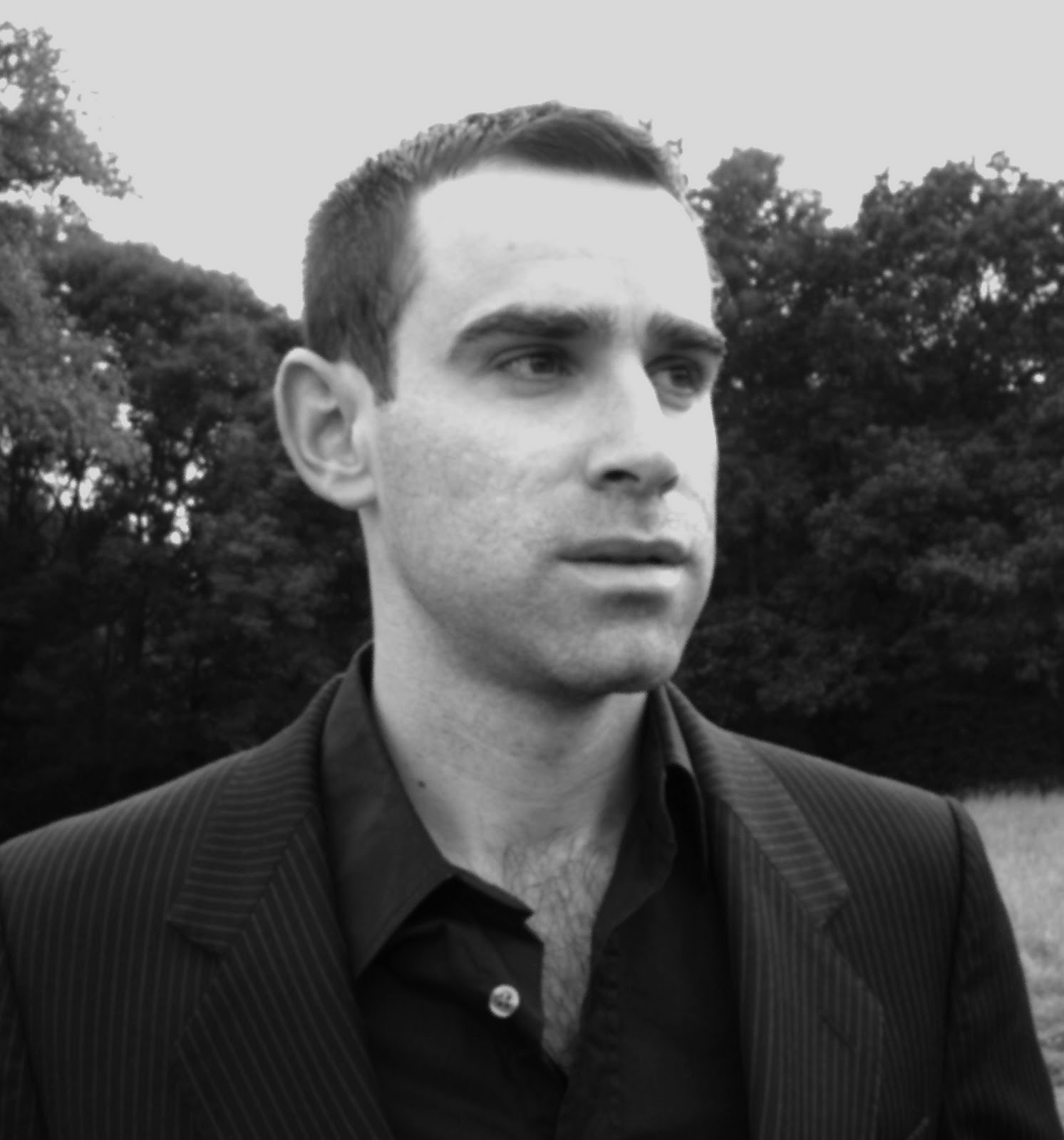
Poem by James Byrne


Eyewear welcomes a poem from James Byrne this morning, as America refuses to rule out a military option in Libya, and rebel forces are beaten back.  Byrne is one of the best of the younger generation of British poets, and is also an editor of anthologies, literary studies, and the vital Wolf magazine; he divides his time between New York and London.  His latest collection was Blood/Sugar (reviewed here recently) from Arc.


‘are you in the hills Ashur’

for Ashur Etwebi

to find an anchor-point
in the burning compass 
to ask your Sufi acumen
your active pacifism
and colossal progeny
are you in the hills Ashur
the prophecies you wrote
read predatorily acute
there at the blade shaft
amid battle-shrapnel
connecting peace war
to holy war to bureau war
these eternal strictures                        
handiwork for bribe cuts                    
to mass in the censoring
scythe over Green Square
still-shot for Libyan TV
agenda-set cutaways
strip cold an entire family
from the video montage
along border strongholds 
the rancour to delete 
phone folders cameras
the palpable hallucination 
a child blown deep
at the belly for the same
old rhetoric same facts
useless to an emergency
are you in the hills Ashur
steely and bulletproof
the black oak shell-skin
of the roadside corpse
not you not you but
freeze-framed to broker
the convivial fuel deal
a pack full of joker cards       
the mad dog’s wheelmen
de-rig photo propagandas
he becalmed and resolute 
jeeped in a spoof studio 
not at the drum fields
pointing his rotten cane
who guards the pass there                  
only dust in the footages
left-over luggage 
the finger-waggling
send-in-the-marines
counter-bluff guzzled up
by SUV track distance
where I come back
blind after the dream
after the nightmare
to a dead phone line
to your epicurean face
missing in the crowd

JB. March 6th 2011 

Comments

This poem makes me think repeatedly - what human suffering is going on in Libya behind the TV images?
oliver dixon said…
Taut,powerful lines, subtly-judged between political contumely and a more lyrical impulse. It feels like the next step on from some of the Middle East-themed poems in Blood/Sugar. Hadn't heard of Tripolan poet Etwebi but just found a marvellous long poem of his at:

http://english.chass.ncsu.edu/freeverse/Archives/Spring_2007/poems/A_Etwebi.html

Hey James, when's that new Wolf arriving?

Popular posts from this blog

A  poem for my mother, July 15 When she was dying And I was in a different country I dreamt I was there with her Flying over the ocean very quickly, And arriving in the room like a dream And I was a dream, but the meaning was more Than a dream has – it was a moving over time And land, over water, to get love across Fast enough, to be there, before she died, To lean over the small, huddled figure, In the dark, and without bothering her Even with apologies, and be a kiss in the air, A dream of a kiss, or even less, the thought of one, And when I woke, none of this had happened, She was still far distant, and we had not spoken.

Poetry vs. Literature

Poetry is, of course, a part of literature. But, increasingly, over the 20th century, it has become marginalised - and, famously, has less of an audience than "before". I think that, when one considers the sort of criticism levelled against Seamus Heaney and "mainstream poetry", by poet-critics like Jeffrey Side , one ought to see the wider context for poetry in the "Anglo-Saxon" world. This phrase was used by one of the UK's leading literary cultural figures, in a private conversation recently, when they spoke eloquently about the supremacy of "Anglo-Saxon novels" and their impressive command of narrative. My heart sank as I listened, for what became clear to me, in a flash, is that nothing has changed since Victorian England (for some in the literary establishment). Britain (now allied to America) and the English language with its marvellous fiction machine, still rule the waves. I personally find this an uncomfortable position - but when ...

IQ AND THE POETS - ARE YOU SMART?

When you open your mouth to speak, are you smart?  A funny question from a great song, but also, a good one, when it comes to poets, and poetry. We tend to have a very ambiguous view of intelligence in poetry, one that I'd say is dysfunctional.  Basically, it goes like this: once you are safely dead, it no longer matters how smart you were.  For instance, Auden was smarter than Yeats , but most would still say Yeats is the finer poet; Eliot is clearly highly intelligent, but how much of Larkin 's work required a high IQ?  Meanwhile, poets while alive tend to be celebrated if they are deemed intelligent: Anne Carson, Geoffrey Hill , and Jorie Graham , are all, clearly, very intelligent people, aside from their work as poets.  But who reads Marianne Moore now, or Robert Lowell , smart poets? Or, Pound ?  How smart could Pound be with his madcap views? Less intelligent poets are often more popular.  John Betjeman was not a very smart poet, per se....