When you open your mouth to speak, are you smart? A funny question from a great song, but also, a good one, when it comes to poets, and poetry. We tend to have a very ambiguous view of intelligence in poetry, one that I'd say is dysfunctional. Basically, it goes like this: once you are safely dead, it no longer matters how smart you were. For instance, Auden was smarter than Yeats , but most would still say Yeats is the finer poet; Eliot is clearly highly intelligent, but how much of Larkin 's work required a high IQ? Meanwhile, poets while alive tend to be celebrated if they are deemed intelligent: Anne Carson, Geoffrey Hill , and Jorie Graham , are all, clearly, very intelligent people, aside from their work as poets. But who reads Marianne Moore now, or Robert Lowell , smart poets? Or, Pound ? How smart could Pound be with his madcap views? Less intelligent poets are often more popular. John Betjeman was not a very smart poet, per se....
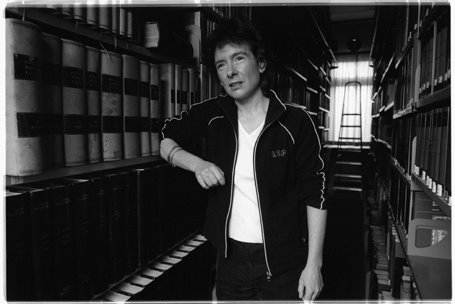
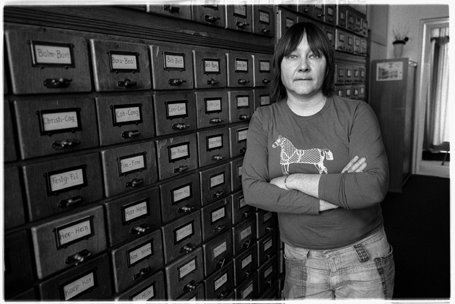 Beloved authors Jeanette Winterson and Ali Smith (both pictured) read last night at the Oxfam Bloomsbury shop - December 14, 2006. I hosted. Around 70 people were in attendance, filling the intimate shop. Wine and mince pies were served. The writers were captivating, giving, full of fun, each reading two Christmas stories they'd written - in one instance, Smith giving her new story to Winterson as a gift. Winterson read half a story from a power book. Sitting atop the Oxfam counter, legs dangling. It was the first time the friends had read together. The audience was deeply appreciative and the entire event seemed dusted with joy. Oxfam raised approximately £1,000 on the night for those in need.
Comments
I love Jeanette Winterson, this is better than Christmas.
Eloise